

We’ve all seen the headlines. Summer in the UK doesn’t just mean standard British sunshine anymore; it seems to mean unsettled weather & heatwaves. Luckily for us changeable weather is not a new thing as Great Britain has always had its fair share of it. But we might have to adapt slightly as the highs get higher! If you’re heading out with a tent during hot weather, that beautiful weather can quickly turn your sleeping space into an absolute microwave.
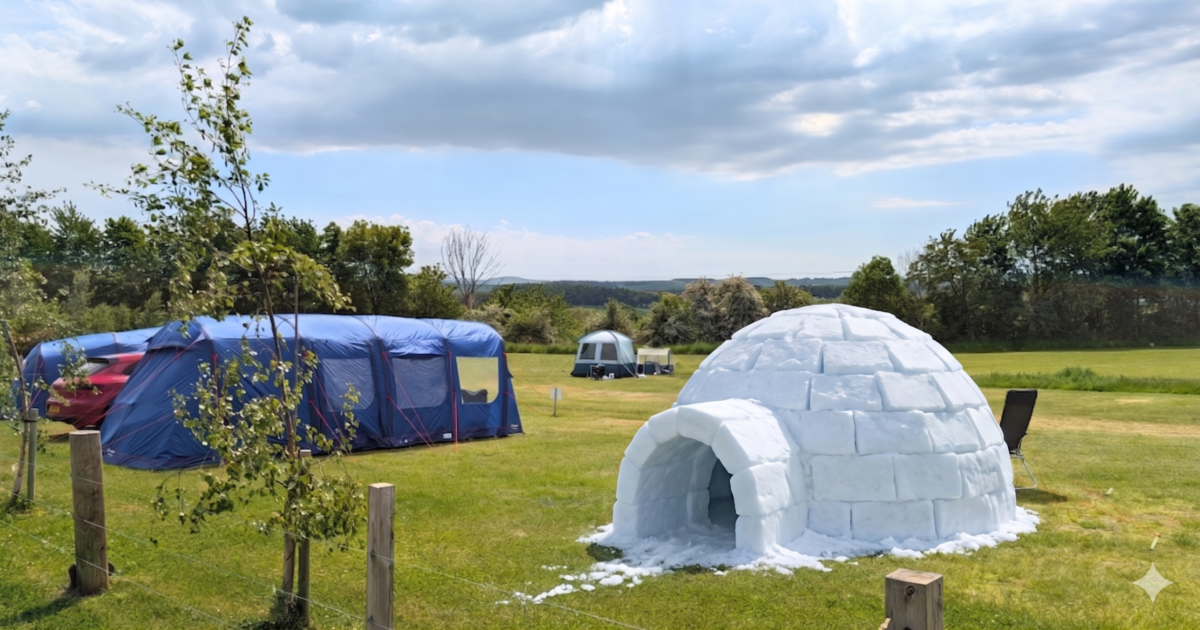 For those not sure, this image was generated by AI.
Here is how to stay perfectly cool, comfortable, and prepared on your next border camping adventure.
It sounds entirely counterintuitive to pack a brolly for a heatwave, but on the Scottish Border, it is your absolute secret weapon.
Where and how you set up your tent determines whether you will sleep at night or lay awake in a pool of sweat.
1.Create your own shade (The Continental Trick):Arrival.
If your pitch is wide open to the sun, take a cue from European campers and string up a freestanding tarp directly over your tent. By suspending a tarp a couple of feet above your tent’s roof, you create an artificial shade canopy. This stops the sun from beating directly onto your tent fabric, keeping the interior significantly cooler. As a bonus, it protects your expensive tent from harsh UV rays, which can break down and degrade tent materials over time.
2.Catch the border breeze:Setup.
Check the prevailing wind direction and vent your tent accordingly. You don’t necessarily need to have the doors wide open to get good ventilation if your tent is well positioned. Also, a mix of high and low level venting helps heat escape.
3.Ditch the flysheet (if safe!):Daytime.
If your tent allows you to pitch the inner mesh layer first, leave the waterproof outer flysheet off during the hottest part of the day. This stops heat from getting trapped. Just keep that umbrella or a tarp handy in case a sudden cloud rolls over!
Leave the thick, four-season sleeping bag at home. Even if the temperature drops during the early hours of the morning, a heavy bag will make the first half of your night miserable.
The Pro Setup: Pack a lightweight cotton sleeping bag liner or a simple flat bedsheet for the evening. Keep your actual sleeping bag unzipped and tucked at the bottom of your mat. When the temperature naturally dips around 4 AM, you can pull it over your legs without overheating early on.
We all know about using a hot water bottle in the winter, but it works perfectly in reverse. Before bed, fill your hot water bottle (or a sturdy stainless steel flask) with the coldest water available from the campsite tap or a clean, shaded stream. Pop it at the bottom of your bedsheet to instantly cool down your feet and regulate your core body temperature.
| What to Pack | Why You Need It |
| Light-coloured Umbrella | Dual protection from blinding UV rays and sudden border rain. |
| Rechargeable Tent Fan | Keeps the air moving through the mesh during stagnant, humid evenings. |
| Insulated Flask | Keeps tap water ice-cold for hours, rather than letting it lukewarm in a plastic bottle. |
| Loose Cotton or Linen Clothing | Wicks sweat away naturally. Avoid dark synthetics that trap heat against your skin. |